
Abstract
The history of conflict between Islam and the West has posed questions such as: whether Muslims and the West are really at cross-road? And is there no way to reconcile the differences? Keeping in view the western claims to superiority over the Muslims in the name of modernity, the paper explores some of the points of assimilation between Muslims and the West. Tracing the origin of western claims to modernity in 'scientific method, and 'politics of individualism' it evolves around the view that Ibn Khaldun (1332-1406) was pioneer of the approach on the basis of which the modern west is claiming the leadership of modern world. Although until the twentieth century, the impact of Ibn Khaldun on the West was not accepted, A. J. Toynbee's analysis reflects an extreme impact of Ibn Khaldun on the Western thought. Therefore, comparing Ibn Khaldun and A. J. Toynbee's systems of thought, the paper concludes that Ibn Khaldun is the only theorist, whose theories are equally appreciated by the Muslims and the West, which can bridge the gap between Muslims and the West. It has a wide scope to serve the cause of de-escalation of intellectual tension and developing harmony among the conflicting methods, communities and culture.
Author(s):

Dr. Muhammad Shafique Bhatti
Professor/ ChairmanDepartment of History and Civilization Studies, Bahauddin Zakariya University, Multan (Pakistan)
Pakistan
- muhammadshafiq@bzu.edu.pk
- 0092 333 762 97 87

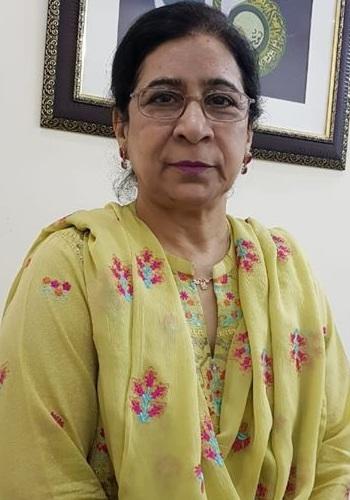
Dr. Shehnaz Akhtar
Professor (Rtd.)Department of Political Science, Bahauddin Zakariya University, Multan
Pakistan
- 0092 336 048 64 60
Details:
| Type: | Article |
| Volume: | 17 |
| Issue: | 1 |
| Language: | Urdu |
| Id: | 5e7d23b5aeae6 |
| Pages | 77 - 96 |
| Discipline: | Urdu |
| Published | June 30, 2010 |

Copyrights
| Journal of Research (Urdu) uses Creative Commons license Authors, retain copyright and grant the journal right of first publication with the work simultaneously licensed under a Creative Commons Attribution License that allows others to share the work with an acknowledgement of the work's authorship and initial publication in this journal. |
|---|

This work is licensed under a Creative Commons Attribution-NonCommercial-NoDerivatives 4.0 International License.